
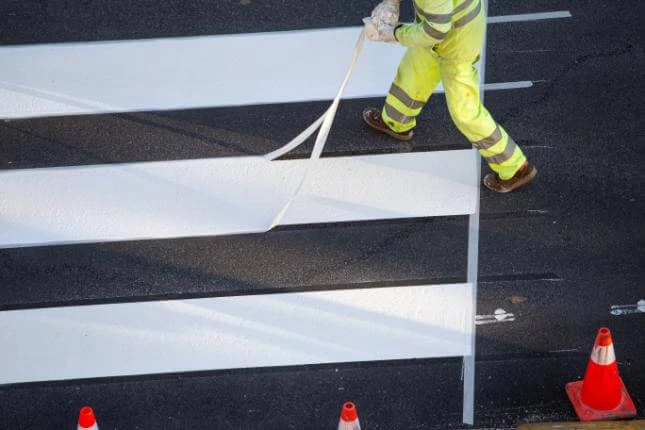
Thermoplastic Road Markings in Maltby
Contact UsAt Hot Melt Thermoplastic Markings, we provide thermoplastic road marking services in Maltby S66 8, including new installations, refreshes, and removal of existing lines.
Thermoplastic road markings are a long-lasting, high-visibility solution used across highways, car parks, commercial sites, and school zones.
Applied using heat, this material forms a hard-wearing bond with the surface, creating lines, symbols, and directional markings that can endure heavy traffic and varied weather conditions.
Since road safety and durability are key concerns, thermoplastic is the preferred material across the UK for regulatory and directional markings.
Types of Thermoplastic Road Markings
Thermoplastic road markings are produced in several standard types because different traffic conditions, layouts, and safety requirements demand specific performance features.
Longitudinal Line Markings - These include centre lines, edge lines, lane lines, and overtaking lines because continuous guidance reduces lane drift and head-on collision risk.
Transverse Markings - These include stop lines, give way lines, and pedestrian crossing bars because clear stopping points improve junction compliance and pedestrian safety.
Symbols and Legends - These include arrows, speed limits, bus lane markings, and directional text because visual instructions reduce driver confusion and improve traffic flow.
Hazard and Warning Markings - These include chevrons, hatching, and box junctions because high-contrast layouts discourage dangerous manoeuvres and keep junctions clear.
Coloured Surface Markings - These include red, green, and blue panels for bus lanes, cycle lanes, and safety zones because colour coding improves route recognition and user separation.
Profiled and Ribbed Markings - These include rumble lines and edge profiles because raised patterns generate vibration and sound that alert inattentive drivers.
High-Reflectivity Markings - These contain glass beads and retroreflective elements because night-time visibility reduces accidents in low-light conditions.
Skid-Resistant Markings - These incorporate anti-skid aggregates because increased surface grip improves braking performance in wet conditions.
Preformed Thermoplastic Markings - These are factory-made symbols and lines applied by heat because consistent thickness ensures uniform quality and fast installation.
Temporary Thermoplastic Markings - These are used in roadworks and diversions because removable formulations support short-term traffic management without surface damage.
Thermoplastic road markings in Maltby are selected from these types because material thickness, reflectivity, and durability directly influence road safety, compliance, and maintenance costs.
How much do Thermoplastic Road Markings Cost in Maltby?
The average cost of thermoplastic road markings in Maltby starts from £4 to £8 per linear metre for standard white or yellow lines.
Factors affecting the price of road markings include total surface area, access restrictions, surface condition, and whether removal of old markings is required.
At Hot Melt Thermoplastic Markings, we offer free site surveys and provide itemised, fixed quotes to suit your requirements.
What are the Benefits of Thermoplastic Road Markings?
Thermoplastic road markings in Maltby offer excellent performance for safety, clarity, and longevity. Key benefits include:
Fast curing for minimal disruption to roads or facilities
High visibility day and night due to reflective glass beads
Durable in harsh weather and high-traffic areas
Suitable for a wide range of symbols and layouts
Low maintenance with long-term cost efficiency
Fully compliant with UK road safety standards
Are Thermoplastic Markings Suitable for Car Parks in Maltby?
Thermoplastic road markings are widely used in car parks in Maltby because they offer durability, high visibility, and a quick drying time.
Since car park surfaces often experience constant vehicle movement, thermoplastic materials withstand wear and tear better than paint-based alternatives.
As these markings include bay lines, directional arrows, numbers, and EV charging symbols, they help improve safety and navigation in busy commercial or residential car parks across Maltby.
How Long do Thermoplastic Road Markings Last ?
Thermoplastic road markings generally last between 3 to 7 years, depending on traffic levels, surface type, and weather exposure.
Heavily trafficked areas like junctions or bus lanes may show wear more quickly, while quieter roads can retain markings for much longer.
Proper application, line thickness, and post-installation curing time all contribute to their lifespan.
Periodic maintenance or partial remarking is often all that’s needed to keep them compliant and clearly visible.
What Surfaces can Thermoplastic Road Markings be Applied to?
Thermoplastic road markings in Maltby can be applied to various surfaces, including asphalt, bitumen, and prepared concrete.
Surface preparation is essential to ensure proper adhesion; this may involve cleaning, drying, or priming with bonding agents.
In some cases, shot blasting or surface grinding is used to remove old paint or debris.
We carry out all necessary prep work to ensure a clean and durable application
Can you Remove Old Road Markings Before Applying New Ones?
We can remove existing road markings before applying new thermoplastic lines or symbols. This is especially important when reconfiguring traffic layouts, changing car park bay designs, or replacing faded markings.
Our team uses specialist removal methods such as hydroblasting, surface grinding, or shot blasting to cleanly strip old lines while minimising surface damage.
Once removed, the new thermoplastic markings can be applied with precision and strong adhesion.
Do Thermoplastic Markings Comply with UK Highway Regulations?
Thermoplastic markings in Maltby are compliant with UK traffic and road safety regulations, including standards set by the Department for Transport.
At Hot Melt Thermoplastic Markings, we ensure they are used correctly in public roads, school zones, and other regulated environments.
Road markings such as centre lines, pedestrian crossings, disabled bays, and speed limit roundels are installed using approved layouts, colours, and dimensions for full compliance.
What Colours are Available for Thermoplastic Road Markings?
Thermoplastic road markings in Maltby are available in a variety of standard colours, including white, yellow, red, blue, green, and black.
These colours serve different purposes, such as white for lane lines, yellow for no-parking zones, red for bus lanes, and blue for disabled bays.
Custom colours can also be used for branding or specialised markings in private developments or themed spaces.
What are Thermoplastic Road Markings in Maltby?
Thermoplastic markings in Maltby are a form of road surface signage made from a mixture of plastic binders, pigments, and reflective glass beads.
They are applied hot (typically at 180°C) and quickly bond to tarmac or concrete surfaces, setting within minutes to create a tough, reflective finish.
In Maltby, these markings are commonly used for centre lines, edge lines, arrows, disabled symbols, give way triangles, pedestrian crossings, and speed roundels.
Due to their high resistance to wear, UV light, and rainfall, they are ideal for public roads, school areas, and industrial estates.
We cover Maltby (South Yorkshire)