
Hot Melt Thermoplastic Markings
Contact UsAt Hot Melt Thermoplastic Markings, we specialise in the installation of BS-compliant thermoplastic markings, delivering precision-applied lines, symbols, and graphics that remain bright and functional even in high-traffic areas.
Hot melt thermoplastic markings are a durable, high-visibility line marking solution used across roads, car parks, playgrounds, and commercial premises.
As thermoplastics have a quick drying time, long lifespan, and superior skid resistance, thermoplastic line marking is widely used for permanent and semi-permanent applications in public and private environments.
Contact us today for a free, no-obligation quote for hot melt thermoplastic marking services today.
What are Hot Melt Thermoplastic Markings?
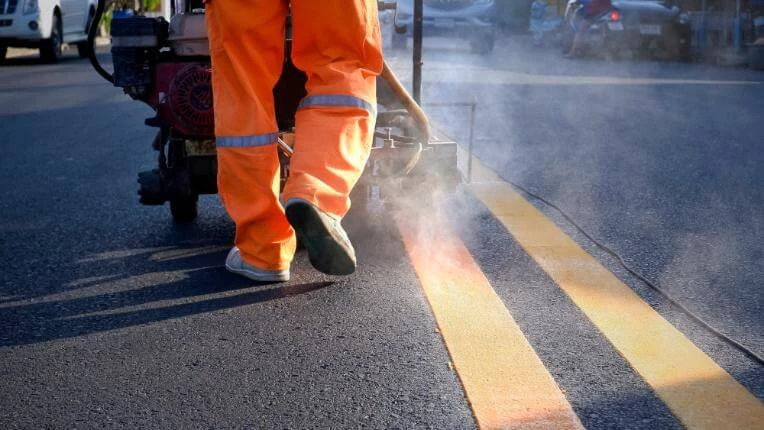
Hot melt thermoplastic markings are created by heating solid thermoplastic resin to a molten state and applying it directly onto a prepared surface.
Once applied, the material hardens quickly and bonds to the substrate, forming a tough, weather-resistant line or symbol.
As thermoplastic contains reflective glass beads and pigments, it provides enhanced night-time visibility and colour retention. This makes it a preferred solution for road markings, cycle lanes, school zones, disabled bays, and pedestrian crossings.
What is the Cost of Thermoplastic Marking?
The cost of hot melt thermoplastic markings starts from approximately £3 to £10 per linear metre.
Pricing for hot melt thermoplastic markings depends on the complexity of the design, surface preparation required, volume of material, and site accessibility.
For example, basic white lines for a car park will cost significantly less than custom-coloured playground markings or branded warehouse zones.
A detailed site assessment is essential to provide an accurate quote, as surface condition, safety measures, and required drying times will affect the overall cost.
Where are Thermoplastic Markings Applied?
Thermoplastic markings are used on roads, highways, and traffic management surfaces because they bond strongly to asphalt and concrete and withstand heavy wear.
Public Roads and Motorways - They are used for centre lines, edge lines, lane dividers, arrows, and symbols because high durability and reflectivity improve driver guidance and reduce accident risk.
Urban Streets and Town Centres - They are applied at junctions, crossings, bus lanes, and cycle lanes because fast setting times minimise traffic disruption and maintain visibility in busy areas.
Motorways and Dual Carriageways - They are installed for long-line markings and hazard warnings because thick thermoplastic layers resist abrasion at high traffic speeds.
Pedestrian Crossings and School Zones - They are used for zebra crossings and safety markings because bright colours and skid resistance increase pedestrian visibility and safety.
School Playgrounds and Sports Areas - They are used for games courts, hopscotch, learning grids, and activity zones because colour stability and slip resistance support safe play and long-term use.
Car Parks and Retail Sites - They mark bays, arrows, and walkways because long service life reduces maintenance costs and keeps layouts clear.
Airports and Transport Hubs - They are used on runways, taxiways, and service roads because chemical resistance and reflectivity support safe aircraft and vehicle movement.
Industrial Sites and Warehouses - They define routes, hazards, and loading zones because tough coatings withstand heavy machinery and frequent traffic.
Ports and Logistics Centres - They mark lanes and safety zones because resistance to weather and fuel spills maintains operational safety.
Thermoplastic markings are used across these environments because heat-applied material forms a thick, reflective, and long-lasting surface that performs reliably under traffic, play, and weather stress.
How Long do Thermoplastic Markings Last?
Thermoplastic markings usually last between 3 to 7 years depending on traffic volume, surface type, and maintenance.
On well-prepared surfaces, such as new or treated asphalt, the bond is especially strong, giving a long-lasting result with minimal fading.
Since thermoplastic includes reflective beads, it maintains performance during both day and night conditions.
Regular cleaning and the absence of aggressive wear (such as from forklifts or heavy vehicles) can further extend lifespan.
What are the Benefits of Hot Melt Thermoplastic Markings?
Hot melt thermoplastic markings offer superior durability, clarity, and compliance with UK road marking standards. The main benefits include:
Fast curing time, allowing traffic use within minutes of application
Long-term durability, typically lasting several years
Reflective properties for night-time visibility
Skid-resistant finish for improved pedestrian and vehicle safety
Customisable colours and symbols, ideal for branding or playground markings
Low maintenance, requiring fewer touch-ups compared to painted markings
Do Thermoplastic Markings Require Surface Preparation?
For thermoplastic markings to bond effectively, the surface must be clean, dry, and free from loose debris or oil.
Our team conduct a thorough inspection before installation to assess the surface and perform any required preparation, including pressure washing, drying, or primer application.
Proper surface preparation not only ensures strong adhesion but also extends the lifespan of the markings and prevents early failure.
On older or worn tarmac, additional preparation may be needed to restore the surface profile.
Can you Install Playground or Decorative Thermoplastic Markings?
Our team installs custom playground thermoplastic markings, including educational games, fitness trails, daily mile tracks, and school crests.
These decorative markings are applied using the same hot melt process, ensuring vibrant colour, anti-slip safety, and long-lasting performance.
Schools and nurseries prioritise safety and visual impact, thermoplastic is ideal for playgrounds where both creativity and durability are required.
Designs can be fully customised to suit the age group, theme, or space.
Can Thermoplastic Markings be Applied in All Weather Conditions?
Thermoplastic markings should only be applied in dry weather with surface temperatures above 5°C.
Cold, wet, or damp surfaces can affect adhesion and reduce the durability of the markings.
We monitor weather forecasts and schedule works during suitable conditions to ensure the material bonds effectively.
Proper weather planning helps prevent early wear or lifting of the markings.
Are Thermoplastic Road Markings Compliant with UK Standards?
Our thermoplastic road markings comply with UK highway specifications, including BS EN 1436 and BS EN 1871.
These standards ensure the markings meet strict criteria for colour visibility, luminance, skid resistance, and performance in wet conditions.
Using compliant materials is essential for public roads, car parks, and commercial sites where safety is critical.
At Hot Melt Thermoplastic Markings, we only use certified products that meet or exceed all regulatory requirements.
How Quickly can Thermoplastic Markings be Used After Application?
Thermoplastic markings typically harden within 5–10 minutes of application, depending on air and surface temperature.
Areas can be reopened to pedestrian or vehicle use almost immediately after installation.
This fast curing time reduces downtime for businesses, roads, and schools.
The quick setting also improves safety by minimising access disruption.
Can you Remove Old Thermoplastic Markings?
We offer thermoplastic marking removal using specialist techniques such as thermal lances, hydroblasting, or surface grinding.
The method used depends on the surface material, location, and condition of the markings.
Removing old or worn lines is often essential before reapplication or surface resealing.
A clean surface improves adhesion and ensures a high-quality result for new markings.
What Colour Options are Available for Thermoplastic Markings?
Thermoplastic markings are available in a wide range of colours, including white, yellow, red, blue, green, and more.
Standard road markings typically use white and yellow, while custom applications like playgrounds and sports areas may use brighter colours
At Hot Melt Thermoplastic Markings, we supply coloured thermoplastic markings to meet both functional and decorative requirements.
All pigments are UV stable to maintain colour vibrancy over time.
Get a Quote for Thermoplastic Marking
If you're looking for thermoplastic road markings, car park lines, or playground graphics, our experienced installation team offers precision, compliance, and reliability.
From initial consultation to fast installation and aftercare, we deliver professional results with minimal disruption.
Contact us today to request a free, no-obligation quote for thermoplastic markings and discover how we can help improve the safety, appearance, and performance of your outdoor spaces.